Transforming disconnected operational data into a unified hub
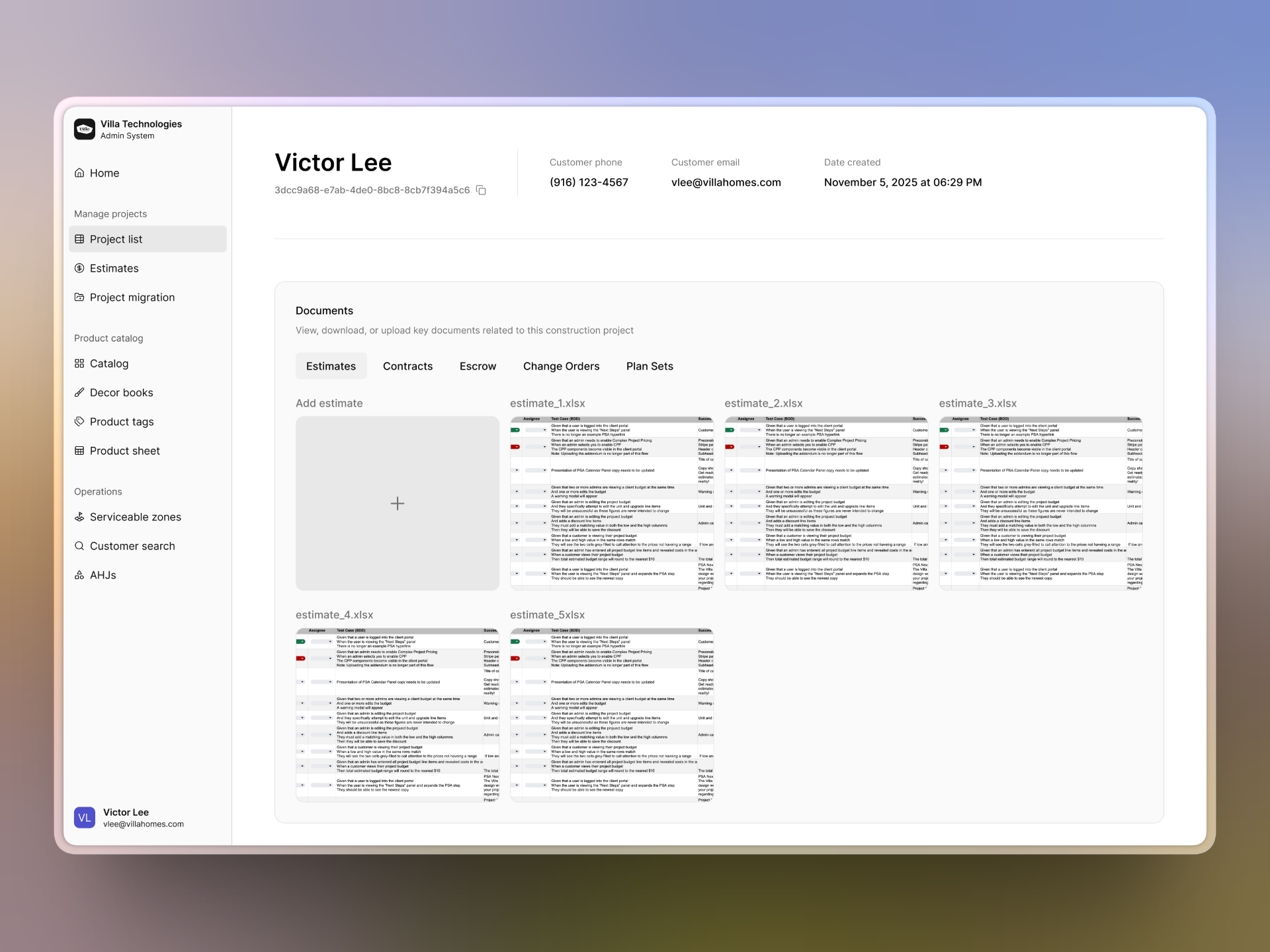
Designing an admin ecosystem that serves field workers needing instant access to data, and estimators leveraging that data to rapidly generate quotes and budgets.
Role
Lead Product Designer
Timeline
2025
Problem #1
Reliance on messy folder structures for information created data silos
Our construction team relied on a Google Drive where project details such as contracts, permits, and budgets were buried inside nested folders. This architecture was confusing and overwhelming to navigate.
Problem #2
Data silos drastically increased the time required to create budgets
Because costs and data were locked inside Google Drive, estimators couldn't easily reference them. This forced our team to manually hunt for pricing data, turning what should have been a quick calculation into a slow process.
Open Google Drive
Open Active Projects
Find correct project
Open project budget
Find correct data point
A simplified flow of the original experience finding budget data. It's more cumbersome than you might think!
Unifying scattered data without disrupting existing workflows
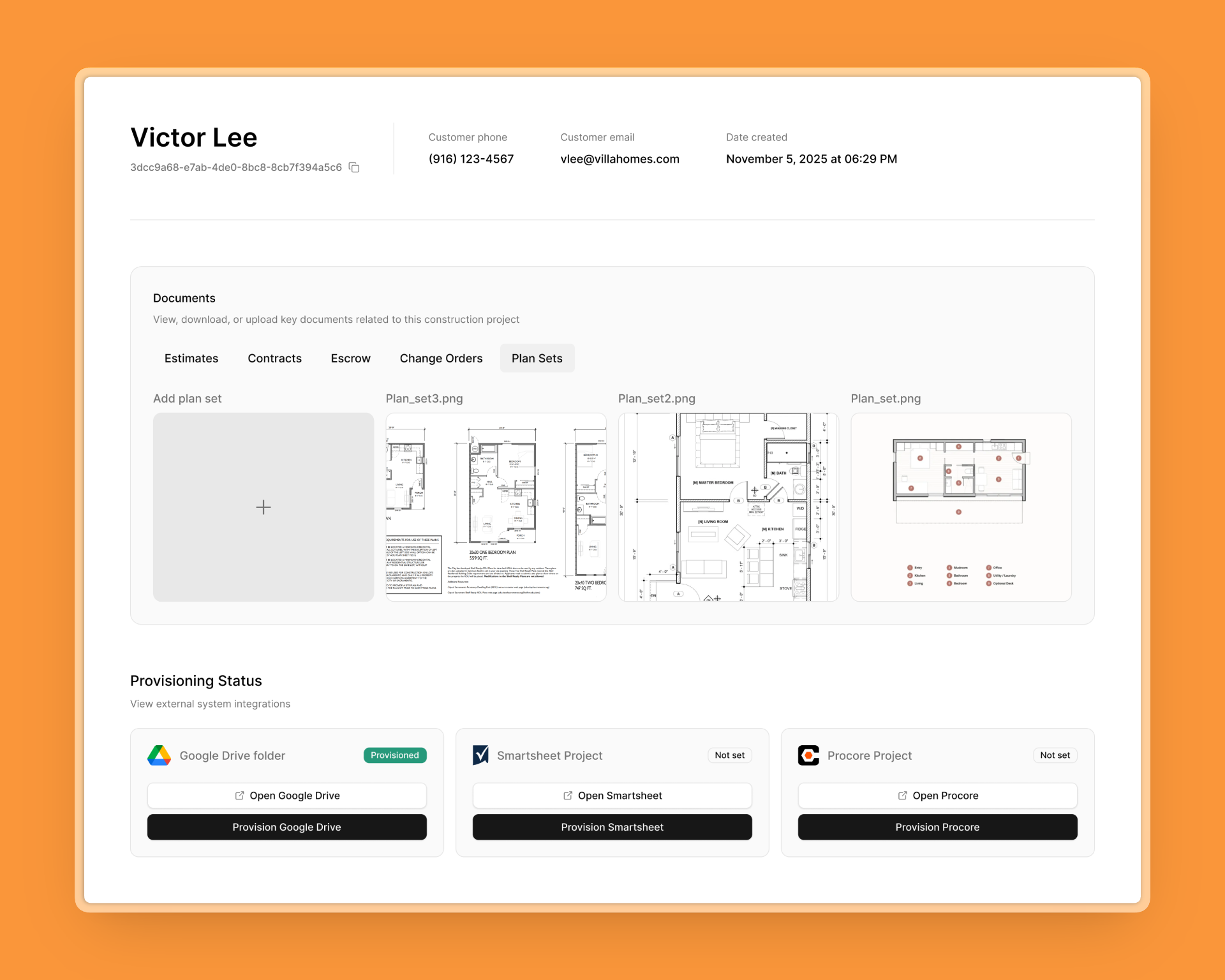
Internal teams clung to hacky workarounds to find and use data. We interviewed users to understand how they mentally segment their data, and built a system that allows them to better find and use data without disrupting their existing workflows.
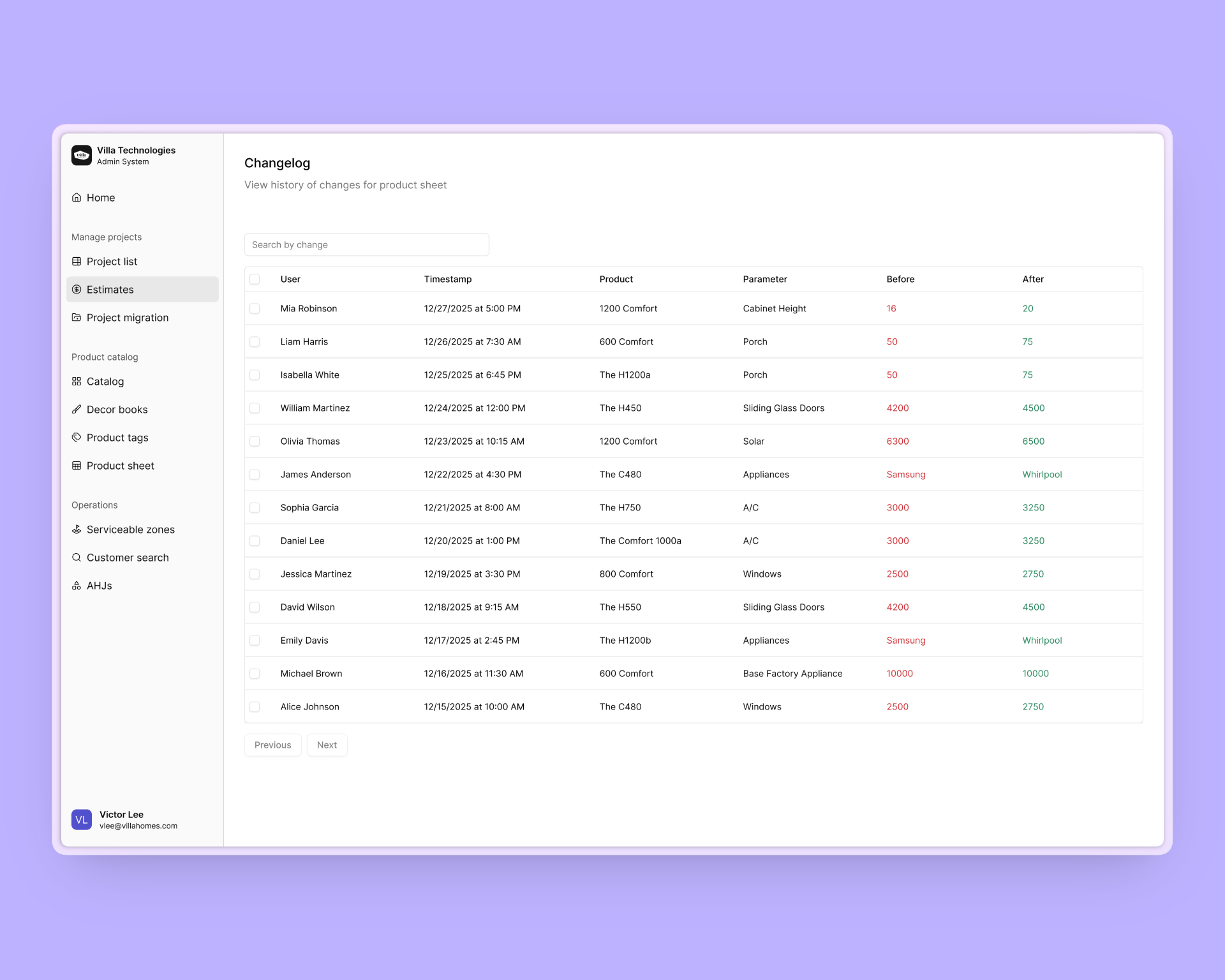
Ensuring data integrity through a changelog trail
By unifying data, it allowed us to have a single source of truth to track changes to various input points.
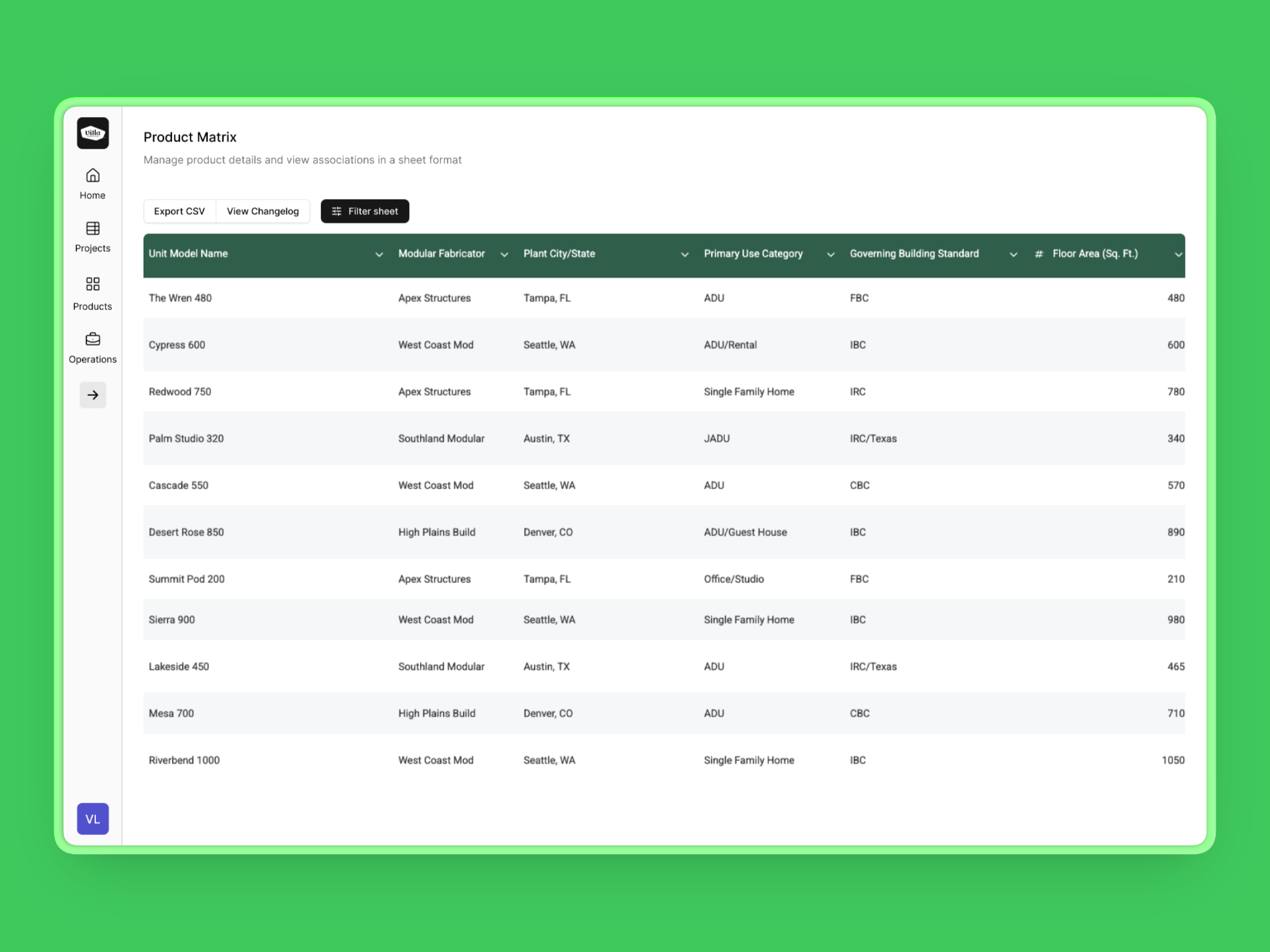
Leveraging unified data to automate complex project estimates
The critical breakthrough was establishing a single, living record for project data. Previously, estimators wasted hours ensuring they had the latest pricing data. By centralizing this data into one master library, we improved accuracy and speed.
The spreadsheet is a mock placeholder image to protect company privacy.
Results
Maturing our data structure to support business growth
By replacing fragile, manual dependencies with a centralized database, we removed the administrative friction that was limiting our capacity.
Increased estimation velocity
By replacing an archaic structure with a centralized database, we reduced the time required to generate estimates. This allows the team to handle a higher volume of projects more efficiently.
Faster project turnaround
Field crews have easier access to data, meaning less downtime digging for information and fewer errors due to outdated info. Removing these delays helped streamline the entire construction lifecycle.
Organizational alignment
We reduced confusion caused by scattered data. With a single system, field workers and estimators can better talk to each other and reference the same artifacts.
Want to read more? Get in touch for more information.
Some specifics of this work are protected under NDA. For a deeper look into the process, decisions, and outcomes, reach out directly and I can share more context privately.